Sunday, 15 March 2020

Tattie clamp

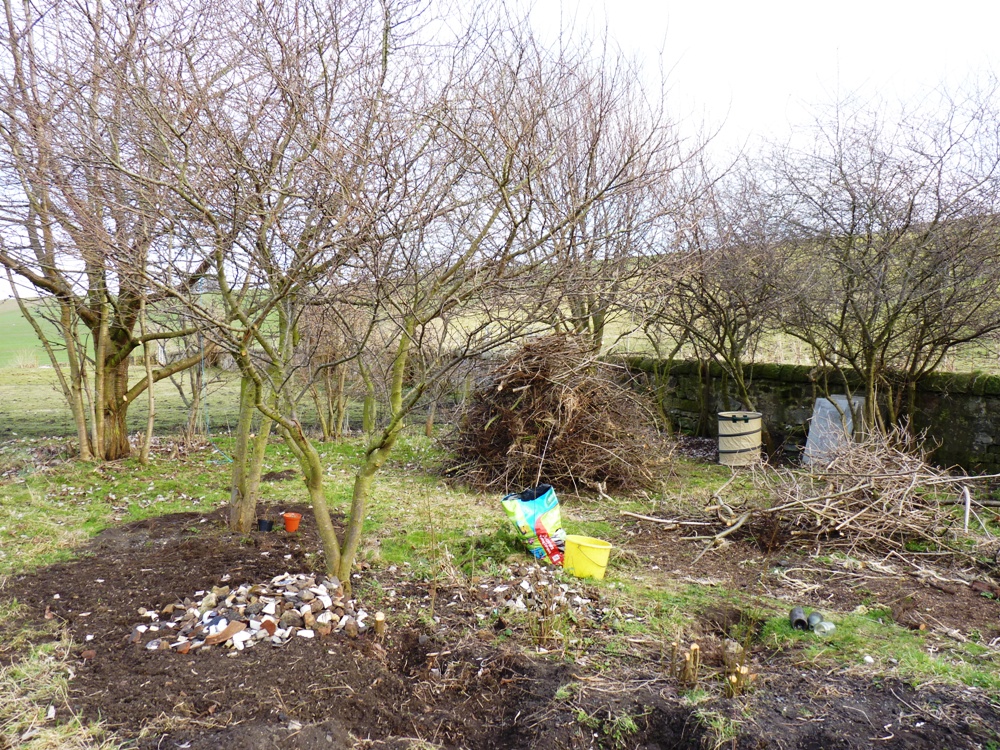
Starting out with our new plot last year, we put nearly half of it over to potatoes - this saved us having to do anything else with it, such as building beds, and it automatically prepared the soil for this year’s full use of the plot.


The upside was a summer full of potatoes for anyone who would have them, and us burying the rest - some 60kg - in a clamp.


 This old school storage method of re-burying potatoes in a straw-lined hole in the ground keeps them in the proverbial cool, dark place with sufficient moisture to keep well into the winter and beyond. A method of building a clamp is described with pictures here: http://blog.mr-fothergills.co.uk/potato-clamps-storing-potatoes-vegetables-using-clamp/

So how is this news six months later? Well, we just collected the last bucket of potatoes from the clamp to turn into chips, pie mash and roast tatties.

Clamping produced mixed results for us last year. We were most successful with large Maris Piper, which were muddy but unblemished when retrieved. Not so with Red Duke of York, which either rotted or started sprouting, while smaller Kestrel and Maris Piper seemed popular winter homes for slugs and even some golden cyst worm. Given half the potatoes that went in the clamp were not in the best condition in the first place - scabbed rather than damaged - I estimate we lost between 10 and 20% to rot and slugs. In hindsight, I would have lined the bottom of the clamp with stones to drain away rain, used a lot more straw to eat off the soil and wildlife, and clamped higher above ground level rather than fully buried - but then who knew winter would be quite this wet.

Lessons learnt for next time, however our new and permanent plot layout won’t require this scale of effort again; our new potato beds  take up barely 1/3 of last year’s space - and that’s fine, because nobody in this day and age needs to grow, and indeed store, this many potatoes.


The old tattie patch has now given way to two 4x1.2m bean beds, a chard cold frame, a raised greens and pumpkin patch, two new red currants, two gooseberries and lots of new raspberries.

On the other side of the plot, following out four-bed rotation, in 2020 we are going to try Charlottes, to be eaten fresh, Cara as main crop, and a little gem of a tasty yellow-fleshed wonder we ate and loved at a Blackisle restaurant - when we asked for the variety, we were presented with a small paper bag of seed potatoes and a shrug. They are happily chitting in the greenhouse - we will see!


Friday, 13 March 2020

The hunger gap risotto

March is notorious as the month where investment into the allotment doesn’t come close to matching the output, the hunger gap for subsistence farmers and those attempting self sufficiency. This is the first year where, with the help of a cold frame and greenhouse, I have had year-round lettuce in the form of winter varieties: butter head and endive. The sheltered chard is also ready for gentle harvest and the purple sprouting broccoli is not far off our first meal. Our clamped potatoes are nearly used up - finally - the remaining leeks need to be used and the kale is looking magnificent after a very mild winter. Sadly, so are the slugs.

Tonight’s dinner used some of these In a way or young children will eat, by themselves, without argument: hidden vegetable risotto (easy, 30 minutes)

One onion, chopped
One garlic clove, chopped
Olive oil for sautéing
Four small leeks, chopped into chunks
Fry these until softened, then add
One and a half cups of arborio rice
One cup of white wine (why do I have left over Pinot Grigio?)
Three cups of good vegetable stock
Four tablespoons of nutritional yeast flakes
Black pepper
Stir in
A bunch of fresh kale leaves, chopped quite fine, particularly of source of complaint
Half a cup each of frozen peas and broad beans
Stir frequently to prevent sticking to the bottom of the pot until rice is cooked but not mushy - about 15 minutes. Serve with gran padano or parmesan cheese, toasted pumpkin seeds and salad. And wine.

Sowing time

It’s March! Sowed Oriental bright salad mix, purple mustard mizuna, green mizuna, round red lettuce, marouli and light and dark blita in the cold frame. Tomatoes, leeks and brussels sprouts seedlings are already growing in the greenhouse. Some lovely tomato varieties: red robin, golden crown, Alicante and red cherry. Bring right next to Musselburgh, that was our first choice of leek.

Tuesday, 25 September 2018

Beetroot leaves

 Do you like chard? Chances are you'll love beetroot leaves. Here's what we've done with them for lunches on the go. Vegetarian, savoury, filling and healthy. Packed with protein and a good chunk of your five a day.


You'll need:
9 filo pastry sheets (or pastry of your choice)
2 white onions
300g beetroot leaves and stems
1 pack feta cheese 
1 egg
1 tin butter beans
1 tbsp dried dill
salt, pepper, cumin to taste
olive oil to brush

Fry diced onions in a little olive oil, add chopped beetroot leaves and stems when translucent and cook until wilted. Allow to cool before mixing in the crumbled cheese, beaten egg, beans, dill and seasoning. Set aside.
Lay a stack of three filo sheets on a clean work surface. Cut in to two lengthways and set one strip aside. Place 1/6 of the filling 5cm from the edge of the filo strip and fold the edge over the top before folding the pie up like a triangle and placing on an oiled baking tray. Brush with olive oil and repeat for the other five triangles. Bake for 30 minutes at 200C.
Keeps in the fridge until demolished.

Sunday, 23 September 2018

Well hello again!

The seasons have come and gone, the ground has frozen and thawed, weeds and plants thrived and wilted, trees have grown and so much has been sowed, picked, cooked and eaten.
We just haven't been online much.

Tuesday, 17 May 2011

Allotment holiday

 Parents have a way of getting things right and being impressive - and when it comes to the size of their vegetables, mine have definitely got something right in Greece. I remember when they grew rocket from seeds I sent and complained it tasted "woody" - when I visited I was presented with a small christmas tree of a rocket plant with foot-long leaves. Mine had hardly grown two inches before bolting in Scotland...

Anyway, this time Carol showed off her beetroot, while Wolfgang was worried two leeks might not feed 4 people. Under normal circumstances I would agree, but with these two, not a problem.

So, here are two tried, tested and much praised recipes for what to do with leeks and beetroots. Don't worry - normal sized vegetables will work fine, just tripple the quantity!

Leeks a la Nenya

2 of Wolfgang's Leeks (or 6 from the shop)
4tbsp olive oil
salt to taste
300ml red wine (Shiraz will work well)

Cut Leeks into 3cm cylinders, fry upright in a non-stick pan with a little olive oil on a low heat, covered with a lid, until the bottom half is soft. Take care not to burn - switch pan off and rest if necessary. Turn individually to cook the other side by the same method. Season with salt. Now comes the trick: increase the heat and add red wine, half a glass at a time, to cool the pan and caramelise the leeks on both sides. Serve hot or cold. Surprisingly very very tasty.

Beetroot salad a la Carol


2 of Carol's Beetroots (or 6 from the shop)
olive oil
garlic powder
tsatsiki mix (alternatively salt and dill)

Boil the beetroots, drain, peel and slice 5mm thick. Sprinkle generously with garlic powder and tsatsiki mix. This salad keeps for a few days in the fridge, tastes better with time and keeps giving.


Wednesday, 9 March 2011

Frost

Woke up to a white icing sugar dusting over Edinburgh - some of which didn't clear until mid-day. The few days of warm sunshine were a wee taste of spring, not to be taken as the start of a bright and warm growing season. Fingers crossed the beetroot seeds will forgive me...

Monday, 7 March 2011

Roots all over again

I arrived at the farm today to find the patter of tiny feet all over our raked roots bed... pheasants after worms again. Sowed 1 row Early Nantes carrots, 1 row Jamie Oliver's special purple carrots (moment of weakness in Homebase the other day - they are purple!), 1 row spring onions, 1 row Detroit2 beetroots and stripy beetroots. Then I realised the last two shouldn't be sown until April - too late! We'll see what happens. I also extended the existing onion rows with calendula, which will be very pretty, very soon.
Covered the lot with chicken wire and netting - no more pattering birds dust bathing in this wee corner!

Sunday, 6 March 2011

March on Green

Spring is upon us, and everywhere around the farm little green parcels are unwrapping themselves, propped on grey wood or soil. I find it baffling that nature rolls out precicely one shade of translucent green on just about every plant!
The area still looks very bleak - we can see straight through the forest garden, and the only green touches are the conifer hedge and tufts the horses and sheep have left of the surrounding fields. The buds of pale green life are heralding the rapid changes in store for the next few months. Time to get some seeds in the ground and the mulch on the weedy bits.
rose
comfrey
raspberries
rhubarb
lettuces

Saturday, 5 March 2011

A new year a new look!

First day of the season on the farm, and a gazillion things to start with after the winter break.
Like a nice cup of tea and Nenya's brownies for happy farmers sporting wooly hats.

The rest of cold and sunny Saturday was taken up with maintenance. On the whole our patch is in great nick - but there's always room for improvement. Leeks, lambs lettuce and jerusalem artichokes are the only crops for harvest at the moment - with the odd feral potato thrown in! 
Malcolm moved (very heavy) slabs about and "fixed" the bench with lopped cherry suckers.
We dug up blackthorn, jerusalem artichokes and the turf on what's going to be the new tattie patch, and chopped and sawed off a whole lot of tree. Nenya also moved our victorian rubbish pile to the North side of the tree - a fraction of the antique landfill treasure we've dug up over the past year.We tried to light the pile of blackthorn branches in the middle, but that was optimistic - a couple of weeks of drying time should have us a nice bonfire though! 

Four seasons: before and after

We're coming up to our co-op anniversary.
Remember this? 

One year on, here we are, all dug over, planted, weeded, watered, harvested and eaten. So much easier starting this time round!

Thursday, 11 November 2010

New recipe: Eggs, beans and waffles*

Ingredients (for 1 person):
  • 2 potatoes waffles from Lidl
  • 2 eggs
  • Half a tin of baked beans from Lidl
  • Some olive oil (probably also from Lidl, maybe Sainsburys)
  • Salt & pepper
  • Tomato Ketchup (I think we got it from Sainsburys)
Method:
  1. Stick the waffles in the toaster on maximum setting
  2. Fry the eggs in olive oil
  3. Heat the beans in a pan
  4. Season with salt and pepper and serve the whole lot on a plate with a massive dollop of ketchup on the side


*Because sometimes I just can't be arsed with all this organic permaculture malarky.

Sweet potato bread

This is Jay's recipe for a fabulous gluten-free bread. We haven't grown sweet potatoes yet, just all sorts of normal ones and Jerusalem artchokes, which would probably also work well!

2 large sweet potatoes
200 g soya flour
200 g polenta
200 ml soy milk
4 tbsp olive oil
2 heaped tsp baking powder
1/2 tsp salt
seeds (optional)

Boil potatoes, peel and mash. Blend all main ingredients together, then add seeds, and squish into lined loaf tin and bake about at gas mark 5 (180-200C) for 40 minutes or until knife comes out clean.
Serve still warm with butter or an olive oil and balsamic vinegar dipping mix. Great for gluten free vegans and to posh up a simple soup meal.

Monday, 11 October 2010

Beetroot-oo what you believe in

And in my case that would be cake. We'll be growing a lot more beetroot next year - unlike radishes, it doesn't seem like one can have too much of it - we've had it roasted, boiled, grated and now baked. At larger-scale self sufficient communities they are stored in crates of sand over winter to stop them shrinking - seems to work fine if you can avoid gritty meals upon up-sanding. Anyhow, ours have all long been converted!

Maggie gave us some recipes to start with, and this is what we baked:

Moist chocolate cake with a beetroot pink squidge

By any standard, this cake is divine. Yes, the quantity of beetroot used is the only disappointment in this recipe, but it's amply made up for with chocolate!
300 g beetroot, boiled until tender (~30 minutes)
200 g dark chocolate (75%)
200 g butter
4 tbsp hot water or coffee
140 g flour
3 tbsp cocoa powder
1 tsp baking powder
5 eggs
180 g sugar

Butter a 20 cm cake tin. Pre-heat the oven to 180C/gas4.
Whisk the egg whites until stiff, the whisk in the sugar.
Bring a few cm of water to simmer in a small pot and rest a bowl on top to heat. Break the chocolate into the bowl to melt and add the 4 tbsp hot water and the butter in small chunks. Mix briefly when melted, transfer to a large mixing bowl and allow to cool a little. Stir in the egg yolks followed by the beetroot. Then fold in the egg whites and the sieves flower, baking powder and cocoa. Do not over-mix. Bake at 160C for 30-40 minutes until firm around the edge but Still a little wobbly in the middle. This will set as it cools. Serve cold with yoghurt or sour cream. Lovely.

Beetroot and buckwheat seed loaf

David's favourite by far - the first gluten and dairy free cake he actually ate most of!
250 g buckwheat flour
5 level tsp baking powder
1/2 tsp baking soda
1 tsp ground cinnamon
200 g brown sugar
180 ml sunflower oil
3 eggs
250 g beetroot
120g seeds (pumpkin, sunflower, poppy)
1/2 lemon juice and zest
50 g dried apricots

Line a loaf tin with baking paper; grease with oil or vegan margerine. Pre-heat the oven to 180C/gas4. Beat the egg whites until stiff and set aside. Beat oil, sugar and egg yolks together. Add the grated beetroot, lemon, chopped apricots and seeds. Mix the dry ingredients and sieve over the mix. Add the egg whites and fold together gently but not too thoroughly until just combined. Pour into the loaf tin and bake for 45 minutes. Leave in switched off oven for a further 15 minutes.

This is a moist fruity tea cake that tastes healthier than it probably is... with the added satisfaction of seedy crunch all the way through! The beetroot almost disappears, leaving just the deep earthy taste of wholefood...

Saturday, 9 October 2010

Feast!

A long day on the plot, digging, weeding, picking and planning. Followed by dinner with Cate, Malcolm, Hanna, David and Sarah. Mostly home grown. Baked potatoes, sprouting broccoli with lemon and garlic, hot tomato and onion chutney, mixed leaf salad, elderberry and apple chutney. And some highly processed cream cheese from the supermarket for good measure, and to buffer our slow descent into veganism.


We made pie out of our share of Abundance Apples.


Malcolm gets the credit for the pretty stars and moon decoration.


All done! Stuffed. Recipes will follow.

Sunday, 5 September 2010

Spanish style tortilla with beetroot leaves

Our beetroots and potatoes are doing incredibly well and we've also some onions coming on a treat. Beetroot leaves are surprisingly pretty nice either in a salad, or used cooked, like spinach. Here's a tasty recipe I cooked up for breakfast today that uses all of them:


Ingredients:
  • A large potato or two, diced into small pieces
  • Beetroot leaves, roughly chopped (spinach or chard will also work well)
  • A medium sized onion or two
  • 3 eggs
  • Salt and pepper
  • Olive oil
Method:
  • Put the diced potato(es) on to boil.
  • Just before the potatoes are ready, add a little olive oil to a hot frying pan and start frying the onions.
  • When the potatoes are ready and the onions are part cooked, add the potatoes to the frying pan. You might also want to add some more olive oil to stop the potatoes sticking.
  • While these are cooking, crack the eggs into a large bowl and roughly mix the yolks and whites together.
  • Once the onions look like they're nice and translucent and the potatoes are starting to brown slightly, put them in the bowl with the eggs. The smell should be gently teasing your taste buds by this point.
  • Add the chopped beetroot leaves (or spinach, or chard) to the now empty frying pan, along with a little more olive oil.
  • Cook the leaves till they've reduced and softened a bit and then add them to the bowl with the eggs and potatoes.
  • Season the lot with as much or as little salt and pepper as you like and then mix it all together.
  • Add a little more oil to the frying pan (look, I didn't say this was the diet version, did I?) and then pour in the contents of the bowl. Cover the frying pan with a lid to help it cook all the way through.
  • Once it's getting quite solid and the bottom is nicely browned, you need to turn it over and cook the other side (here comes the clever bit...)
  • Remove the lid and place a large dinner plate over the top of the tortilla. Turn the frying pan over, keeping the plate firmly in place. Then slide the half cooked tortilla back into the pan, uncooked side down.
  • Once the other side is also nicely browned, it's ready to eat.
  • Mmmmmm! Tasty!

The joy of organic gardening is...

The joy of organic gardening is finding a nest of caterpillars in your broccoli after you've just taken a bite.


Sunday, 29 August 2010

Courgette, apple & buckwheat cake

We seem to have done plenty of the sowing and picking posts, at the expense of the cooking and eating bits (which surely is the best part of allotment gardening) and, I think, have been guilty of straying into the dark, murky waters of smugness and self congratulations on being such worthy urban allotment warriors. Well, pish to that - I'm interested in being a smug, self congratulating, fat and sated allotment gardener, to which end Sarah has been coming up with incredible ways to use the glut of marrows and courgettes we've been having recently.

Here are the before and after pictures of last night's incredible edible.

Before:


After:


Not only is it the about the tastiest cake in the world, it's also gluten-free, dairy free and relatively low GI, as Sarah used agave syrup instead of sugar. It's just about the healthiest cake you'll come across.

I'm not privy to the recipe, however, so I'll have to rely on Sarah to do the honours...

[insert recipe here]

Sunday, 8 August 2010

Blighted confusion!

Someone forgot to tell our tomato plants it's the outdoor plants that are supposed to get tomato blight, not the indoor ones:

Beautiful, healthy outdoor tomatoes.

Sad, dishevelled, blight-ridden indoor tomatoes.

Sigh...

Saturday, 31 July 2010

Photo diary: last seven days at the allotment


Nenya and I had a really productive day last Saturday.

I dug two new beds this week. Just have to figure out what the hell to plant in them now!

The broccoli is coming on a treat.

As are the beetroots - I've got my first baby beetroots from the thinnings and reckon they'll make a lovely salad, grated with olive oil and lemon juice.

I think I'm doing something wrong with the lettuce transplanting. Perhaps the secret is to water them before taking them out of the ground as well as after putting them back in?

This Saturday's haul. Not bad for a chaotic first season, I think. We're now self sufficient for potatoes and lettuce, and check the size of that marrow! (it looks much bigger in real life)

The allotment is a former refuse tip and we're forever finding broken bits of pottery, glass jars, clay pipes and so on. It's pretty nice to find some undamaged examples like these, which I dug up last Saturday.